

Can a ceramic plunger be used in a food - processing industry?
In the dynamic landscape of the food - processing industry, the choice of equipment and components is crucial for ensuring product quality, safety, and efficiency. As a supplier of ceramic plungers, I am often asked whether these components can be effectively used in food - processing applications. In this blog, we will explore the viability of ceramic plungers in the food - processing industry, considering their properties, advantages, and potential challenges.
Properties of Ceramic Plungers
Ceramic materials, such as alumina, zirconia, and silicon nitride, possess a unique set of properties that make them attractive for various industrial applications. When it comes to food - processing, these properties can offer significant benefits.
Hardness and Wear Resistance: Ceramics are extremely hard materials. For example, alumina has a high hardness on the Mohs scale, which means that ceramic plungers can withstand the abrasive forces often encountered in food - processing operations. Whether it's pumping thick food pastes or handling solid - containing food products, the wear - resistant nature of ceramic plungers ensures a longer service life compared to traditional metal plungers. This reduces the frequency of replacement, minimizing downtime and maintenance costs in the food - processing plant.
Chemical Inertness: One of the most important properties of ceramics in the food - processing context is their chemical inertness. Ceramics do not react with most food substances, including acids, alkalis, and organic compounds. This is crucial for maintaining the purity and safety of food products. Unlike some metals that may corrode or leach harmful substances into the food, ceramic plungers provide a non - reactive surface that does not contaminate the food. This makes them suitable for use in contact with a wide range of food items, from acidic fruits to alkaline dairy products.
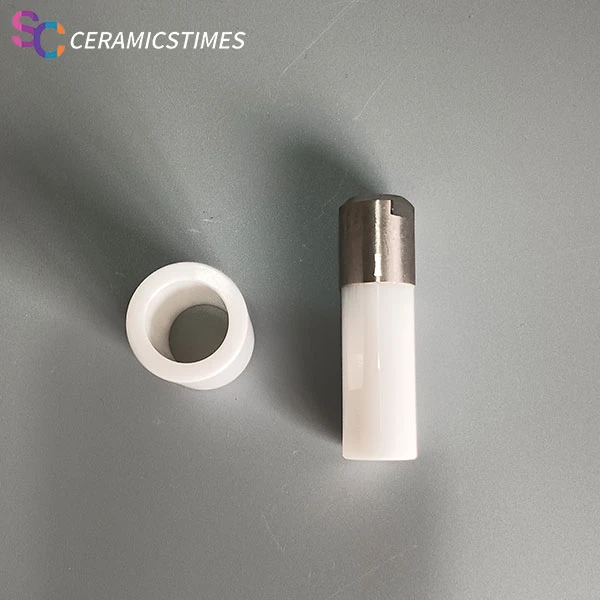
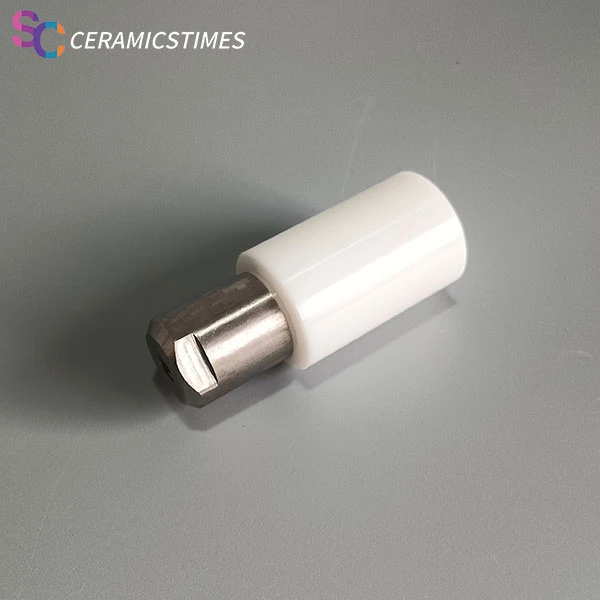
High Temperature Resistance: Food - processing often involves heating and cooling processes. Ceramic plungers can withstand high temperatures without deforming or losing their mechanical properties. This is particularly useful in applications such as pasteurization, where the food needs to be heated to a specific temperature to kill harmful microorganisms. The high - temperature resistance of ceramic plungers ensures that they can operate effectively in these harsh conditions, contributing to the overall efficiency of the food - processing operation.
Advantages of Using Ceramic Plungers in the Food - Processing Industry
Hygiene and Cleanliness: In the food - processing industry, hygiene is of utmost importance. Ceramic plungers have a smooth surface that is easy to clean and sterilize. They do not harbor bacteria or other microorganisms, which helps to prevent cross - contamination between different batches of food products. This is in contrast to some porous or rough - surfaced materials that can trap food particles and bacteria, making them difficult to clean thoroughly. The ability to maintain a high level of cleanliness is essential for meeting the strict food safety regulations in the industry.
Precision and Accuracy: Ceramic plungers can be manufactured with high precision. Their dimensional stability ensures accurate dosing and dispensing of food ingredients. This is critical in applications such as flavoring addition, where precise amounts of flavorings need to be added to the food product. The use of ceramic plungers can improve the consistency and quality of the final food product, leading to higher customer satisfaction.
Energy Efficiency: Due to their low friction coefficient, ceramic plungers require less energy to operate compared to metal plungers. This results in lower energy consumption in the food - processing equipment, reducing the overall operating costs of the plant. Additionally, the long service life of ceramic plungers means that there is less need for frequent replacement, which also contributes to energy savings in the manufacturing and disposal processes.
Potential Challenges and Solutions
Brittleness: One of the main challenges associated with ceramic plungers is their brittleness. Ceramics are more prone to cracking or chipping compared to metals. However, this can be mitigated through proper design and handling. For example, the design of the ceramic plunger can be optimized to reduce stress concentrations. Additionally, the food - processing equipment can be equipped with shock - absorbing mechanisms to protect the ceramic plungers from sudden impacts.
Cost: Ceramic plungers can be more expensive than traditional metal plungers. However, when considering the long - term benefits such as reduced maintenance costs, longer service life, and improved product quality, the overall cost - effectiveness of ceramic plungers becomes apparent. Moreover, as the demand for ceramic components in the food - processing industry increases, economies of scale may lead to a reduction in the cost of ceramic plungers in the future.
Real - World Applications
Ceramic plungers have already found applications in various food - processing operations. For instance, in the production of yogurt, ceramic plungers are used in the filling machines to accurately dispense the yogurt into containers. The chemical inertness of the ceramic ensures that the yogurt remains pure and free from contamination. In the production of chocolate, ceramic plungers are used in the pumping systems to handle the viscous chocolate mass. The wear - resistant nature of the ceramic allows for smooth and efficient pumping, reducing the risk of blockages and ensuring a consistent flow of chocolate.
Related Products and Their Applications
In addition to ceramic plungers, our company also offers other ceramic products that are relevant to the food - processing and medical industries. For example, the Zirconia Ceramic Valve is a high - performance valve that can be used in food - processing equipment to control the flow of liquids and gases. Its excellent chemical resistance and high - temperature stability make it suitable for a wide range of applications.
The Ceramic Medical Devices are designed for use in the medical field, but some of their properties, such as biocompatibility and chemical inertness, can also be beneficial in the food - processing industry. For example, ceramic components used in medical devices can provide inspiration for the development of more advanced and hygienic food - processing equipment.
The Breast Cancer Medical Alumina Crucible showcases the high - quality ceramic materials that we use in our products. The alumina used in this crucible is of the highest purity, ensuring its suitability for sensitive applications. This same high - quality alumina can be used in the production of ceramic plungers for the food - processing industry.
Conclusion
In conclusion, ceramic plungers can be effectively used in the food - processing industry. Their unique properties, such as hardness, chemical inertness, high - temperature resistance, and low friction coefficient, offer numerous advantages in terms of hygiene, precision, and energy efficiency. Although there are some challenges associated with their use, such as brittleness and cost, these can be overcome through proper design and long - term cost - benefit analysis.
If you are in the food - processing industry and are looking for high - quality ceramic plungers or other ceramic components, we invite you to contact us for procurement and further discussions. Our team of experts is ready to provide you with the best solutions tailored to your specific needs.
References
- Smith, J. (2018). Advanced Ceramics in Industrial Applications. New York: Industrial Press.
- Brown, A. (2019). Food Processing Technology: Principles and Practice. London: Elsevier.
- Johnson, R. (2020). Ceramic Materials for High - Performance Applications. Chicago: Ceramic Society Press.