


Boron Nitride Ceramics
Your Professional Boron Nitride Ceramics Supplier
Chemical Composition
Boron nitride (BN) is a synthetic non-oxide ceramic composed of boron and nitrogen in a 1:1 atomic ratio. The hexagonal phase (h-BN) has a layered graphite-like crystal structure, earning it the name “white graphite”. Unlike graphite, h-BN is electrically insulating because its covalent inter-layer bonding localizes free electrons.
Position in Advanced Ceramics
BN ceramics occupy a unique niche among advanced technical ceramics. While alumina and zirconia dominate general wear and structural applications, and silicon carbide/silicon nitride serve heavy-duty mechanical roles, h-BN is selected specifically for its rare combination of thermal shock resistance, chemical inertness, non-wetting behavior against molten metals, and electrical insulation—properties that few other ceramics offer simultaneously.
Common Purity Grades
Commercial BN ceramics are available in several grades:
High-purity h-BN (≥99%): For semiconductor, vacuum furnace, and high-temperature insulation applications.
BN composites (BN-AlN, BN-ZrO₂, BN-SiO₂): Engineered for enhanced mechanical strength, wear resistance, or thermal conductivity in molten metal contact applications.
PBN (Pyrolytic Boron Nitride, 99.995%): CVD-grown, non-porous grade for crystal growth and semiconductor processes.
Main Industrial Uses
BN ceramics are widely used in aluminum casting and foundry (release agents, nozzles, side dams), high-temperature vacuum furnaces (insulators, crucibles, fixtures), semiconductor and PVD equipment, powder atomization, and continuous casting of steel.
Advanced Production Technology
The company employs advanced manufacturing technologies, including sintering, molding, grinding, CNC machining, laser drilling, precision grinding, and polishing processes.
Complete Production Equipment
Key production equipment includes sintering furnaces, isostatic presses, grinders, engraving machines, laser cutters, double-sided grinding machines, sand wire cutting devices, and injection molding machines.
Professional R&D Team
Our team consists of experienced experts dedicated to researching advanced ceramic materials. To date, the team has published over 100 academic papers, filed five Chinese invention patents, and obtained more than 20 utility model patents.
Professional Service
The product has technical support from Ph.D. experts and other experts during the research and development stage. The process is rigorous during the production process, and the after-sales service is on call 24 hours a day.
-
![High-purity Boron Nitride Ceramic Nozzle]() High-purity Boron Nitride Ceramic NozzleHigh-purity boron nitride ceramic nozzles are made from extremely pure boron nitride, ensuring minimal impurities and superior quality. One of the key advantages is their excellent thermal...read more
-
![High Purity Boron Nitride Ceramic Ring]() High Purity Boron Nitride Ceramic RingHigh purity boron nitride ceramic rings are made from extremely pure boron nitride, ensuring minimal impurities and consistent quality...read more
-
![Boron Nitride Ceramic Barrel]() Boron Nitride Ceramic BarrelBoron Nitride Ceramic Barrel is a high-temperature lubricating ceramic with excellent resistance, chemical stability, and wetting ability and is an ideal choice for a wide range of industrial...read more
-
![Boron Nitride Ceramic Rings]() Boron Nitride Ceramic RingsBoron nitride ceramic rings One of the key features is its high thermal conductivity, which allows for efficient heat transfer...read more
-
![Boron Nitride Ceramic Base]() Boron Nitride Ceramic BaseBoron nitride ceramic bases are highly regarded for their unique properties...read more
-
![Boron Nitride Ceramic Sealing Ring]() Boron Nitride Ceramic Sealing RingCeramic sealing rings made of boron nitride are highly valued in a variety of sectors...read more
-
![Boron Nitride Ceramic Tube]() Boron Nitride Ceramic TubeBoron nitride ceramic tubes are known for their high thermal conductivity and excellent electrical insulation properties...read more
-
![Boron Nitride Crucible]() Boron Nitride CrucibleCrucibles for boron nitride are extremely useful and specialized instruments used in many industrial and scientific contexts...read more


Parameter
|
Number |
Performance |
Unit |
Boron nitride |
Boron nitride |
Boron nitride |
|
BN99.9% |
BN99.7% |
BN99.5% |
|||
|
1 |
Density |
g/cm3 |
|
1.6 |
1.9 |
|
2 |
Flexural strength |
MPa |
94~95 |
20 |
35 |
|
3 |
Fracture toughness |
MPa·m1/2 |
|
8 |
11~14 |
|
4 |
Dielectric constant |
εr(20℃,1MHz) |
4.37 |
1.9~3.8 |
1.9~3.8 |
|
5 |
Hardness |
GPa |
1.15 |
2 |
4 |
|
Hardness |
HRC |
|
35 |
40 |
|
|
6 |
Volume resistivity |
Ω·cm(20℃) |
|
10 14 |
10 14 |
|
7 |
Elastic modulus |
GPa |
29.4 |
|
|
|
8 |
Coefficient of thermal expansion |
×10-6/k |
|
1`1.5 |
0.6(x10-6/K) |
|
9 |
Compressive strength |
MPa |
118~120 |
30 |
30 |
|
10 |
Abrasions |
g/cm2 |
|
0.3 |
0.3 |
|
11 |
Thermal conductivity |
W/m×k(20℃) |
|
35 |
63~75W/mk |
|
12 |
Poisson's ratio |
/ |
|
0.5 |
0.5 |
|
13 |
Insulation strength |
kv/mm |
|
28 |
28 |
|
14 |
Temperature |
℃ |
1000 in air/2200 in inert atmosphere |
1000 in air/2200 in inert atmosphere |
850 in air/2200 in inert atmosphere |
Types of Boron Nitride Ceramics
The boron nitride ceramics produced by our company mainly include the following types:
High Purity Boron Nitride Ceramic Ring
High purity boron nitride ceramic rings possess excellent electrical insulation properties. This makes them highly suitable for electrical applications where insulation is crucial to prevent short circuits and ensure safe operation.
Boron Nitride Ceramic Barrel
Boron Nitride Ceramic Barrel is a high-temperature lubricating ceramic with excellent resistance, chemical stability, and wetting ability and is an ideal choice for a wide range of industrial applications.
Boron Nitride Ceramic Rings
Boron nitride ceramic rings One of the key features is its high thermal conductivity, which allows for efficient heat transfer.
Advantages of Boron Nitride Ceramics


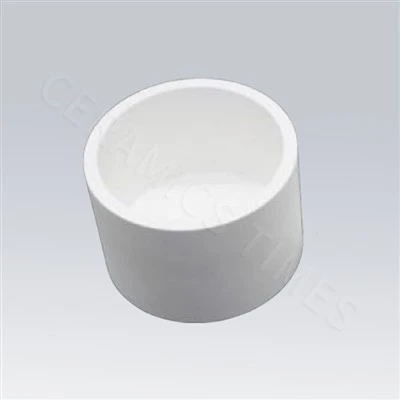

Thermal Shock Resistance
BN ceramics withstand rapid heating and cooling without fracturing. h-BN can endure repeated cycles from 1500°C to room temperature without degradation. The low thermal expansion coefficient (≈1.5–2.0 × 10⁻⁶/K) is second only to quartz among ceramics, making BN highly resistant to thermal gradients.
Non-Wetting Behavior
Molten aluminum, zinc, and many other non-ferrous metals do not wet h-BN. The contact angle for liquid aluminum on h-BN remains approximately 160° up to 900°C. This property prevents adhesion, simplifies cleaning, and enables clean release in casting and atomization.
Electrical Insulation
Despite graphite-like structure, h-BN is an electrical insulator. Volume resistivity exceeds 10¹⁴ Ω·cm at room temperature, and dielectric strength can reach up to 100 kV/mm depending on grade and direction. Unlike alumina, BN maintains insulation at high temperatures in inert atmospheres.
Chemical Inertness
BN resists attack by most molten metals (iron, copper, aluminum, zinc), rare earth metals, glasses, molten salts, and inorganic acids/alkalis. It is not attacked by semiconductor melts such as germanium and silicon.
Machinability
Hot-pressed BN has a Mohs hardness of approximately 2, comparable to graphite. It can be machined into complex, high-precision geometries using conventional CNC equipment and carbide tools—no diamond tooling required. This dramatically reduces fabrication cost and lead time compared to other technical ceramics.
Lubricity
The weak van der Waals bonding between h-BN layers provides excellent solid lubrication. The friction coefficient is approximately 0.16 and does not increase at elevated temperatures. BN outperforms graphite and MoS₂ in high-temperature and vacuum environments.
High-Temperature Stability
In inert or vacuum atmospheres, BN remains stable up to 2000°C and sublimates at approximately 3000°C. In oxidizing atmospheres, continuous use is limited to roughly 900°C unless protected by coatings.
Applications of Boron Nitride Ceramics
| Industry | Application | Recommended BN Grade / Form |
|---|---|---|
| Aluminum Casting & Foundry | Release coatings, nozzles, ladles, thermocouple protection tubes | h-BN coatings, hot-pressed BN parts |
| Continuous Casting (Steel) | Side dams for thin-strip casting, break rings for horizontal casting | BN-ZrO₂ composite |
| Powder Metallurgy | Gas atomization nozzles, melt delivery systems | BN-AlN, BN-ZrO₂ composites |
| High-Temperature Furnaces | Insulators, setters, crucibles, heating element supports | High-purity h-BN (>99%) |
| Semiconductor / PVD | Insulating shrouds, rails, crucibles for GaAs/InP/OLED | PBN, high-purity h-BN |
| Vacuum Metallizing | Evaporation boats for aluminum deposition | BN-TiB₂, BN-AlN composites |
| Aerospace / Plasma | Hall-effect thruster discharge channels, plasma-facing insulators | High-purity h-BN |
| Glass Industry | Crucibles for molten glass, release agents | h-BN powder/suspension, sintered parts |
Manufacturing Process
Powder Synthesis
BN powder is typically produced via carbothermic reduction of boric oxide (B₂O₃) in a nitrogen atmosphere, or through precursor routes using boron-containing compounds and nitrogen sources. The synthesis route determines crystallinity, particle size, and impurity profile.
Forming
Hot Pressing: The dominant consolidation method for dense h-BN ceramics. BN powder is loaded into graphite dies and sintered under uniaxial pressure at 1800–2000°C. Small amounts of B₂O₃ often act as a liquid-phase sintering aid.
Isostatic Pressing: Used for more complex shapes and larger billets, followed by sintering or hot isostatic pressing (HIP).
CVD (for PBN): Pyrolytic BN is deposited layer-by-layer from gaseous precursors onto mandrels, producing non-porous, high-purity shapes.
Machining
Hot-pressed BN billets are machined to final dimensions using conventional CNC milling, turning, and drilling with carbide tooling. Tolerances of ±0.05 mm are achievable in production.
Customization Process
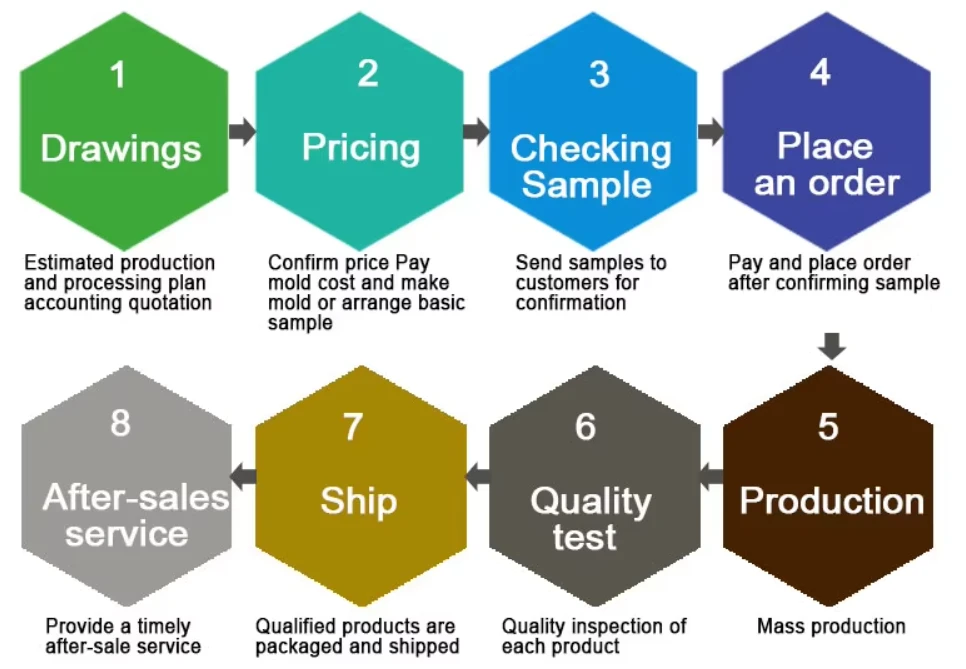
Custom Processing Capability
We offer full custom fabrication from BN billets and near-net shapes:
| Capability | Details |
|---|---|
| CNC Machining | Milling, turning, drilling, boring, slotting. Complex geometries from drawings or STEP files. |
| Precision Tolerances | ±0.05 mm standard; tighter tolerances available on request for critical dimensions. |
| Surface Finishing | Grinding, lapping, polishing to specified Ra values. |
| Coatings & Impregnation | BN suspension coatings for release applications; resin impregnation for enhanced moisture resistance. |
| Composite Grades | BN-AlN for higher strength and thermal conductivity; BN-ZrO₂ for wear and molten metal erosion resistance. |
| Prototype to Production | Single-piece prototypes to medium-volume production runs. |
| Size Range | Small insulators (<10 mm) to large plates and blocks (up to several hundred mm, depending on grade). |
To request a quote, please provide: drawing (PDF/STEP), material grade or application requirements, critical tolerances, surface finish, quantity, and operating conditions (temperature, atmosphere, contact materials).
Our Factory
Superior Ceramics Times Technology Co., Ltd. was established in 2005 and has several production plants in Taizhou, Shaoxing, etc. We also have a registered company in the United States, located at 10 ROBIN, IRVINE, CA 92604.

Our Certificates

FAQ
As one of the most professional boron nitride ceramics manufacturers and suppliers, we're featured by quality products and good price. Please rest assured to buy high-grade boron nitride ceramics from our factory.