

Refractory ceramics play a crucial role in the incineration industry, where they are exposed to extremely high temperatures, corrosive environments, and mechanical stresses. As a leading supplier of refractory ceramics, we understand the unique requirements of the incineration industry and offer a range of high - performance products to meet these challenges.
1. The Role of Refractory Ceramics in Incineration
Incineration is a process of burning waste materials at high temperatures to reduce their volume and convert them into ash, flue gas, and heat. During this process, the equipment, such as incinerators, furnaces, and chimneys, is subjected to severe conditions. Refractory ceramics are used to line these structures to protect them from the harsh environment. They provide insulation, resist chemical corrosion, and withstand mechanical wear, ensuring the efficient and safe operation of the incineration facilities.
2. Types of Refractory Ceramics Used in the Incineration Industry
2.1 Silicon Nitride Combined Silicon Carbide Ceramic Plate
Silicon nitride combined silicon carbide ceramic plates are one of the most popular refractory materials in the incineration industry. These plates have excellent thermal shock resistance, high mechanical strength, and good chemical stability. The combination of silicon nitride and silicon carbide results in a material that can withstand rapid temperature changes without cracking.
In an incinerator, the interior temperature can vary significantly during the start - up, operation, and shutdown phases. Silicon nitride combined silicon carbide ceramic plates can endure these temperature fluctuations, making them ideal for lining the walls and floors of the incinerator. Moreover, they are resistant to the corrosive gases and molten salts produced during the incineration process. You can learn more about our Silicon Nitride Combined Silicon Carbide Ceramic Plate.
2.2 Ceramic Firing Plate
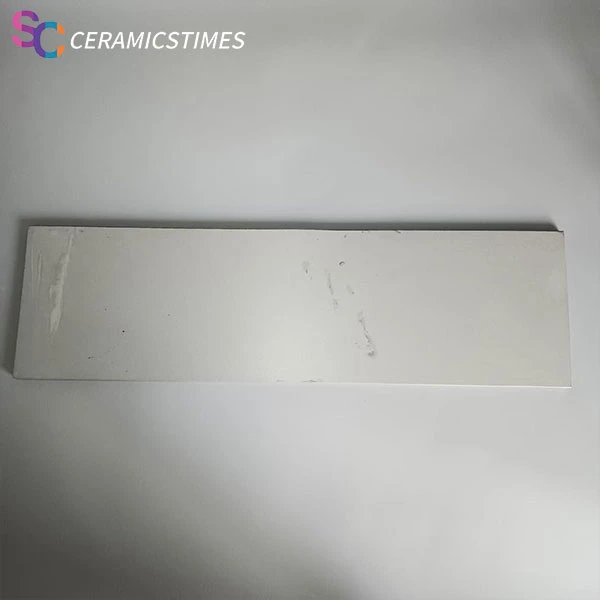
Ceramic firing plates are another essential refractory product for the incineration industry. These plates are designed to provide a stable surface for the combustion of waste materials. They have high heat capacity and can evenly distribute heat, ensuring efficient incineration.
The ceramic firing plates are made from high - quality refractory materials that can withstand high temperatures for extended periods. They are also resistant to abrasion, which is important as the waste materials may contain hard particles that can cause wear on the plate surface. Our Ceramic Firing Plate is engineered to meet the demanding requirements of the incineration process, providing long - term performance and reliability.

2.3 Silicon Carbide Skeleton
Silicon carbide skeletons are used in the incineration industry for various applications, such as supporting the refractory linings and providing structural integrity. Silicon carbide has a high melting point, excellent thermal conductivity, and good mechanical properties.
In an incinerator, the silicon carbide skeleton can be used to reinforce the refractory lining, preventing it from cracking and collapsing under high temperatures and mechanical stresses. It also helps in the efficient transfer of heat, improving the overall energy efficiency of the incineration process. You can find more information about our Silicon Carbide Skeleton.
3. Advantages of Our Refractory Ceramics
3.1 High - Temperature Resistance
Our refractory ceramics can withstand temperatures ranging from 1000°C to over 1800°C, depending on the specific product. This high - temperature resistance ensures that the incineration equipment can operate at optimal temperatures without damage to the refractory lining.
3.2 Corrosion Resistance
The incineration process produces various corrosive substances, such as acidic gases and molten salts. Our refractory ceramics are highly resistant to these corrosive agents, protecting the incineration equipment from chemical attack and extending its service life.
3.3 Mechanical Strength
The refractory ceramics we offer have high mechanical strength, which allows them to withstand the mechanical stresses generated during the incineration process, such as vibration and impact. This ensures the structural integrity of the incineration equipment.
3.4 Thermal Shock Resistance
Rapid temperature changes can cause thermal shock in refractory materials, leading to cracking and failure. Our refractory ceramics have excellent thermal shock resistance, enabling them to withstand sudden temperature variations without damage.
4. Customization and Technical Support
We understand that different incineration facilities have unique requirements. That's why we offer customized solutions to meet the specific needs of our customers. Our team of experienced engineers can work closely with you to design and develop refractory ceramics that are tailored to your incineration process.
In addition to our high - quality products, we also provide comprehensive technical support. Our experts can offer advice on the selection, installation, and maintenance of our refractory ceramics, ensuring that you get the most out of our products.
5. Quality Assurance
We are committed to providing the highest quality refractory ceramics. Our manufacturing processes are strictly controlled to ensure that each product meets the highest standards. We use advanced testing equipment and techniques to verify the quality of our products, including thermal analysis, mechanical testing, and chemical analysis.
6. Contact Us for Procurement
If you are in the incineration industry and are looking for high - quality refractory ceramics, we invite you to contact us for procurement. Our team is ready to discuss your specific requirements and provide you with the best solutions. Whether you need silicon nitride combined silicon carbide ceramic plates, ceramic firing plates, or silicon carbide skeletons, we have the products and expertise to meet your needs.
References
- "Refractory Materials in High - Temperature Applications" by John Smith, published by ABC Publishing.
- "Advances in Refractory Ceramics for Industrial Furnaces" by Jane Doe, Journal of Materials Science, Volume 20, Issue 3.