

Zirconia ceramic beams are widely recognized for their exceptional mechanical properties, high thermal resistance, and excellent chemical stability. These attributes make them highly sought - after in various industries, including automation equipment and photovoltaic applications. As a zirconia ceramic beam supplier, I am often asked about the role of additives in zirconia ceramic beams. In this blog, I will delve into the significance of additives in the production and performance of zirconia ceramic beams.
Understanding Zirconia Ceramic Beams
Zirconia, or zirconium dioxide (ZrO₂), is a versatile ceramic material. Zirconia ceramic beams are used in a variety of applications, such as in Mirror Ceramic Plate due to their ability to maintain shape and integrity under high - stress conditions. They are also found in Robot Ceramic Joints, where their high strength and wear resistance are crucial. In the photovoltaic industry, Photovoltaic Equipment Ceramic Slice often rely on zirconia ceramic beams for their thermal stability.
Role of Additives in Zirconia Ceramic Beams
Stabilization
One of the primary roles of additives in zirconia ceramic beams is stabilization. Pure zirconia exists in different crystal structures at different temperatures. At room temperature, it is in the monoclinic phase, which is relatively brittle. When heated, it transforms into the tetragonal phase, and at even higher temperatures, it becomes the cubic phase. These phase transformations can cause significant volume changes, leading to cracking and failure of the ceramic.
Additives such as yttria (Y₂O₃), magnesia (MgO), and calcia (CaO) are commonly used to stabilize the tetragonal or cubic phase at room temperature. Yttria - stabilized zirconia (YSZ) is perhaps the most well - known example. By adding yttria to zirconia, the crystal structure can be locked into a more stable phase, reducing the risk of phase - related cracking and improving the overall mechanical properties of the ceramic beam.
Improvement of Mechanical Properties
Additives can also enhance the mechanical properties of zirconia ceramic beams. For example, alumina (Al₂O₃) can be added to increase the hardness and wear resistance of the ceramic. Alumina particles act as reinforcement in the zirconia matrix, making the beam more resistant to abrasion and deformation.
Toughening agents are another type of additive. Partially stabilized zirconia with additives can undergo a transformation - toughening mechanism. When the ceramic is subjected to stress, the tetragonal phase can transform into the monoclinic phase, which absorbs energy and prevents crack propagation. This results in a significant increase in the fracture toughness of the zirconia ceramic beam.
Control of Sintering Process
The sintering process is crucial in the production of zirconia ceramic beams. Additives can play a vital role in controlling the sintering behavior. Some additives can lower the sintering temperature, which is beneficial as it reduces energy consumption and can prevent grain growth during sintering.
For instance, certain rare - earth oxides can act as sintering aids. They can promote the diffusion of atoms during sintering, allowing the ceramic particles to bond more effectively at lower temperatures. This not only saves energy but also helps in achieving a more uniform and dense microstructure, which is essential for the performance of the zirconia ceramic beam.
Chemical Resistance
In some applications, zirconia ceramic beams need to have high chemical resistance. Additives can be used to improve the chemical stability of the ceramic. For example, adding certain metal oxides can form a protective layer on the surface of the ceramic, preventing it from reacting with corrosive substances.
In the photovoltaic industry, where zirconia ceramic beams may be exposed to various chemicals during the manufacturing process, the addition of chemical - resistant additives can ensure the long - term performance and durability of the beams.
Impact of Additives on Different Applications
Automation Equipment
In automation equipment, zirconia ceramic beams are often used in components that require high precision and reliability. The additives in the zirconia ceramic beams can enhance their mechanical properties, ensuring that they can withstand the repeated stress and movement in automated systems. For example, in Robot Ceramic Joints, the use of additives to improve toughness and wear resistance is crucial for the long - term operation of the robots.

Photovoltaic Equipment
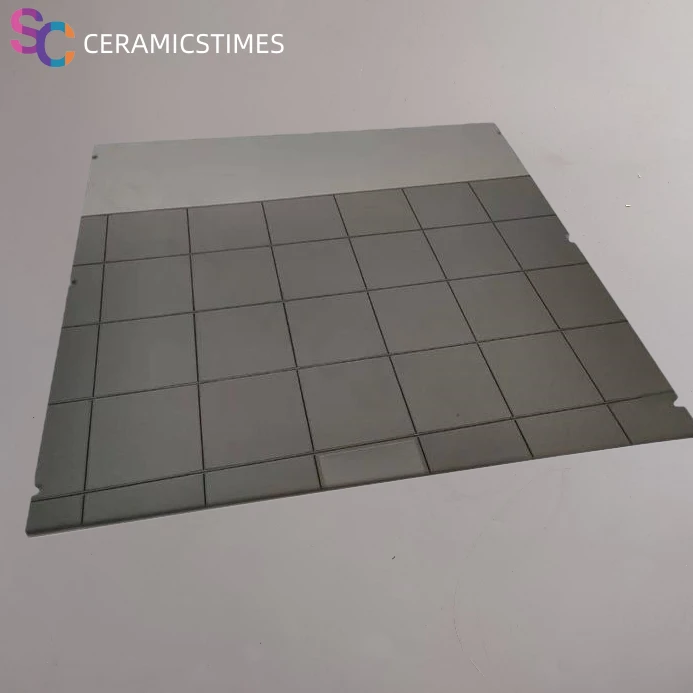
In the photovoltaic industry, zirconia ceramic beams are used in equipment such as Photovoltaic Equipment Ceramic Slice. The thermal stability and chemical resistance provided by additives are essential. The high - temperature environment in photovoltaic manufacturing processes requires the ceramic beams to maintain their integrity. Additives that improve the thermal shock resistance and chemical stability can prevent the beams from cracking or degrading over time.
Mirror Ceramic Plate
For Mirror Ceramic Plate, the smoothness and flatness of the surface are crucial. Additives can help in achieving a more uniform microstructure during the sintering process, which in turn leads to a better - quality surface finish. This is important for applications where precise reflection and optical performance are required.
Considerations in Additive Selection
When selecting additives for zirconia ceramic beams, several factors need to be considered. The type of application is the primary factor. For applications that require high - temperature stability, additives that can enhance thermal resistance should be chosen. In applications where wear resistance is crucial, additives that improve hardness and toughness are more appropriate.
The amount of additive also needs to be carefully controlled. Too much additive can have a negative impact on the properties of the ceramic. For example, excessive addition of an additive may lead to the formation of secondary phases, which can reduce the mechanical properties of the zirconia ceramic beam.
Conclusion
In conclusion, additives play a crucial role in the production and performance of zirconia ceramic beams. They can stabilize the crystal structure, improve mechanical properties, control the sintering process, and enhance chemical resistance. As a zirconia ceramic beam supplier, understanding the role of additives allows us to provide high - quality products that meet the specific needs of different industries.
If you are interested in purchasing zirconia ceramic beams for your automation equipment, photovoltaic applications, or other needs, we would be more than happy to discuss your requirements. Our team of experts can help you select the most suitable zirconia ceramic beams with the right additives for your specific application. Contact us to start a procurement negotiation and find the best solution for your business.
References
- German, R. M. (1996). Powder Metallurgy Science. Metal Powder Industries Federation.
- Kingery, W. D., Bowen, H. K., & Uhlmann, D. R. (1976). Introduction to Ceramics. John Wiley & Sons.
- Rice, R. W. (1998). Mechanical Behavior of Ceramics. Marcel Dekker.