Key Design Considerations for Ceramic Connectors
Material Selection–Choose alumina (Al₂O₃) for cost-effective insulation, aluminum nitride (AlN) for high thermal conductivity, or zirconia (ZrO₂) for extreme mechanical strength.
Thermal Expansion Matching–Pair ceramics with metals (e.g., Kovar or molybdenum) that have similar coefficients of thermal expansion (CTE) to prevent cracking during temperature cycling.
Hermetic Sealing–Use active metal brazing (AMB) or glass sealing techniques for gas-tight connections in vacuum or high-pressure environments.
Contact Interface Design–Optimize contact geometry (e.g., spring-loaded pins) to ensure low resistance and prevent fretting corrosion in dynamic applications.
Dielectric Strength–Design creepage/clearance distances to meet high-voltage requirements (e.g., IEC 60664), especially for EV or power grid use.
Mechanical Stress Relief–Incorporate stress-absorbing features (flexible leads, compliant layers) to mitigate vibration/shock damage in aerospace or automotive systems.
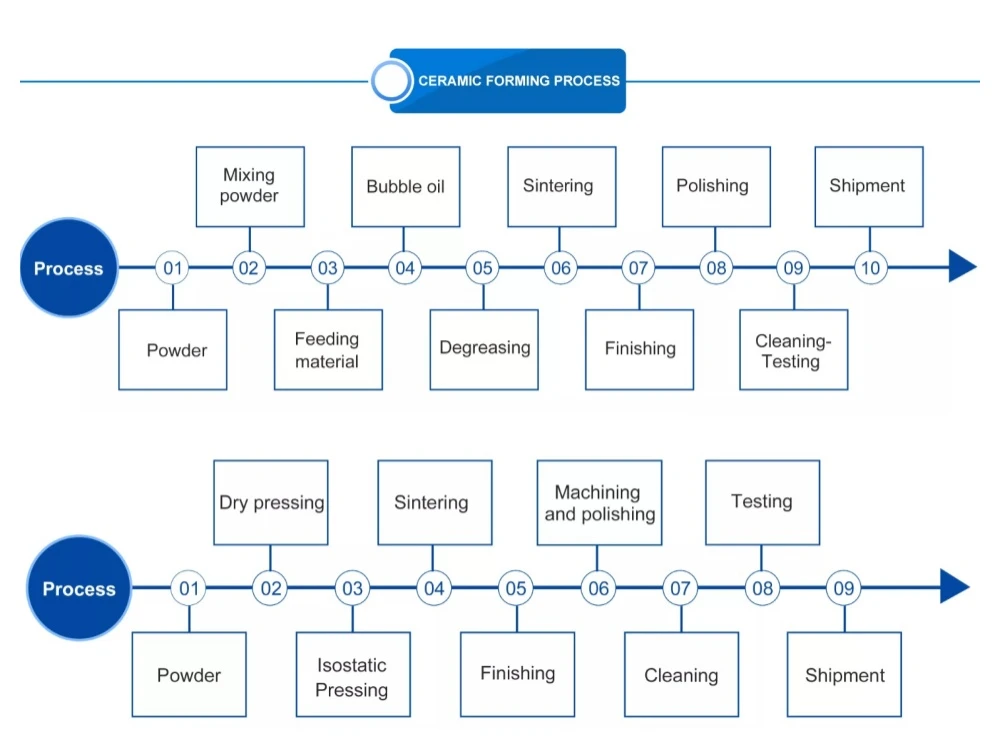
Manufacturing Precision–Tight tolerances (±0.01mm) via laser machining or precision grinding ensure reliable mating in miniaturized connectors (e.g., medical implants).
These factors ensure performance in mission-critical applications while balancing cost and manufacturability.
If you have any questions or need more details about Ceramic Connectors, feel free to contact us. We will serve you wholeheartedly!